Lenins Küsse
Yan, Lianke (31.07.2025)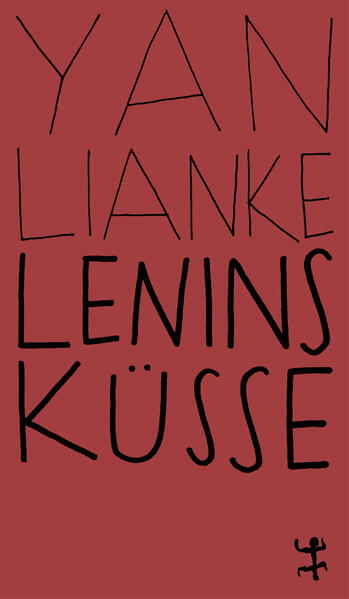
Lenins Küsse · Yan, Lianke
Roman
18,00 €
Preise inkl. MwSt. · Kostenloser Versand ab 25,00 € ·
Sofort verfügbar, Lieferzeit: 1-3 Tage
- Verlag: Matthes & Seitz Berlin
- Autor: Yan, Lianke
- Übersetzer: Kautz, Ulrich
- ISBN: 978-3-7518-4535-9
- Veröffentlichung: 31.07.2025
- Produktform: Taschenbuch
- Umfang: 656 Seiten
- Maße: 120 x 48 x 205 (B/T/H)
- Gewicht: 585
- Reihe: MSB Paperback (082)
- Sprache: deutsch
- Originaltitel: 受活
- Originalsprache: chi
- Auflage: 1. Auflage, Ungekürzte Ausgabe
- MwSt: 7 %
- Lesemotiv: Auseinandersetzen
- Nebenlesemotive: Entspannen
- Produktart: Taschenbuch
- Produktform: Taschenbuch
- Alberto Manguel über Lenins Küsse I associate the summer of my adolescence with Christmas and New Year’s Eve parties. Under a sun that at that time did not cause skin cancer (or so we thought). We celebrated Christmas in the southern hemisphere with slices of cold turkey, Russian salad, cider, panetone and ice cream. My summer reading matched the doubly festive atmosphere: school was out and there were presents under the tree.The history of summer, in both hemispheres, is not very old. While the Romans had summer residences, Chinese emperors had palaces suitable for the sunny season, and until the early twentieth century, only the upper classes divided the year between the town and the country. Although the bourgeoisie began to imitate the aristocracy at the dawn of the Franco-Prussian war, the 1870 edition of the famous French dictionary, Larousse du XIXe siècle still declared the word villégiature (vacation resort) to be a neologism. In 1931, Spain became one of the first countries to recognize paid vacations for workers and to promote the idea of tourism for all. A century earlier, in 1830, Stendhal had used the word “tourist” to differentiate those who “traveled for leisure or curiosity” from the plebs who had to spend their vacations at home. Now being a tourist is to be part of that anonymous torrent that pours like relentless lava all over the most enchanting places on the planet, from the most venerable, such as Toledo (Spain) or Venice (Italy), to the most exotic, such as Bali or Mount Everest, crowding airports and train stations, and leaving behind a trail of plastic bags, cans of drinks and McDonald’s wrappers, without seeing anything of their surroundings but through the lens of their iphones.These days, under the inevitable threat of climate change, summer is beginning to take on terrifying aspects. Hellish temperatures, catastrophic droughts and devastating fires ravage our bucolic fantasies. That remote May, “when the wheat is ripening and the fields are in bloom,” today extends brutally from March or April until the end of the year, and the sweet summer vacations that Proust recalled at his aunt’s house could not be endured today without the help of the pernicious air-conditioning. “Try to always keep a patch of sky over your lives,” Proust advised his readers, not foreseeing that they would need sunglasses and factor 30 sunscreen to block the UVB rays descending on Combray today.Sheltered under a more or less protective umbrella or risking our skin to the relentless sun, books allow us to escape to supposedly better or worse worlds, and to foresee themSheltered under a more or less protective umbrella or risking our skin to the relentless sun, summer readings allow us to rescue supposedly better or worse worlds, and to foresee them. It is curious to note how many famous novels are set in the summer, from The Great Gatsby by F. Scott Fitzgerald; To the Lighthouse, by Virginia Woolf, and Treasure Island, by R. L. Stevenson to William Golding’s Lord of the Flies, Malcolm Lowry’s Under the Volcano, and Italo Calvino’s The Baron in the Trees. Dostoevsky’s Crime and Punishment begins on “a very hot July afternoon”; Julien Sorel, in Red and Black, becomes Madame de Rênal’s lover in the first days of a torrid August; Lord Henry sees the seductive Dorian Gray for the first time “when a light summer breeze was blowing in the trees in the garden”; García Márquez begins the chronicle of his One Hundred Years of Solitude during the month of March of a tropical summer; in Joyce’s Ulysses, Leopold Bloom walks the hot streets of Dublin on the now famous June 16, 1904; Lewis Carroll’s Alice enters Wonderland on “one golden afternoon” of an Oxford summer; Don Quixote sets out on the roads of La Mancha under a fierce summer sun; a century later, under that same sun, Elizabeth Bennet agrees to marry the handsome Darcy and provide a happy ending for Pride and Prejudice. Perhaps summer reading allows for a more leisurely pace than winter reading. Cold encourages concentration and reflection; warmth encourages rambling and daydreaming.What books to read or reread this summer, when temperatures threaten to exceed 40 degrees Celsius (104 degrees Fahrenheit)? Books do not have a sell-by date, like eggs. The chronology of reading is not that of a publishing schedule. We can choose books of poetry or essays: let’s be conventional and choose novels, almost at random. The following are some that were published this year or some time ago, but they are all books (as Roberto Calasso would say) that induce “an inexplicable happiness.” Hernán Díaz, Trust. Silvina Ocampo and Adolfo Bioy Casares, Los que aman, odian (in Spanish). Giorgio Fontana, Death of a Happy Man, Valter Hugo Mãe, The Spanish Making Machine (in Portuguese). Moacyr Scliar, The Book of Houses (in Portuguese). Yan Lianke, Lenin’s Kisses. Olga Tokarczuk, Flights. Fred Vargas, The Chalk Circle Man. Norman Manea, The Hooligan’s Return. Sabahattin Ali, Madonna in a Fur Coat.Alberto Manguel is an Argentine writer, author of books such as ‘A History of Reading’ and ‘Guide to Imaginary Places.’
Ein Sommerschneesturm vernichtet die Ernte im Balou-Gebirge. Hunger droht, doch Kreisvorsteher Liu weiß die Lösung: Tourismus. Der bringt Geld, und Lenin ist ein Touristenmagnet. Russland den Leichnam Lenins abzukaufen liegt da natürlich nahe. Moskau kann sich schließlich die Erhaltung der Leiche sowieso nicht mehr leisten. Um den Ankauf Lenins zu finanzieren, sollen die Dorfbewohner eine Art Zirkus gründen. Dass diese allesamt Behinderungen haben, schreckt Liu nicht.
Mit Lenins Küsse gelingt Yan Lianke ein absurdes Meisterwerk über die Volksrepublik und das moderne China, eine subversive Tragikomödie über das zerstörerische Verlangen nach Macht und Reichtum.
Biografie – Yan, Lianke
Yan Lianke, 1958 in der Provinz Henan geboren, diente ab 1978 in der Volksbefreiungsarmee, an deren Kunsthochschule er Literatur studierte. Obwohl einige seiner Werke auf dem Index verbotener Bücher stehen, erhielt er zahlreiche chinesische Literaturpreise und war für viele internationale Literaturpreise nominiert. Er lebt heute in Peking.
Ulrich Kautz (1939-2020) arbeitete bis 1966 als Übersetzer und Dolmetscher an der Botschaft der DDR in Peking. Ab 1992 war er außerordentlicher Professor an der Universität Mainz und übersetzte Werke u. a. von Deng Youmei, Wang Meng, Wang Shuo, Yu Hua, Yan Lianke und Lu Wenfu.
Anmelden